


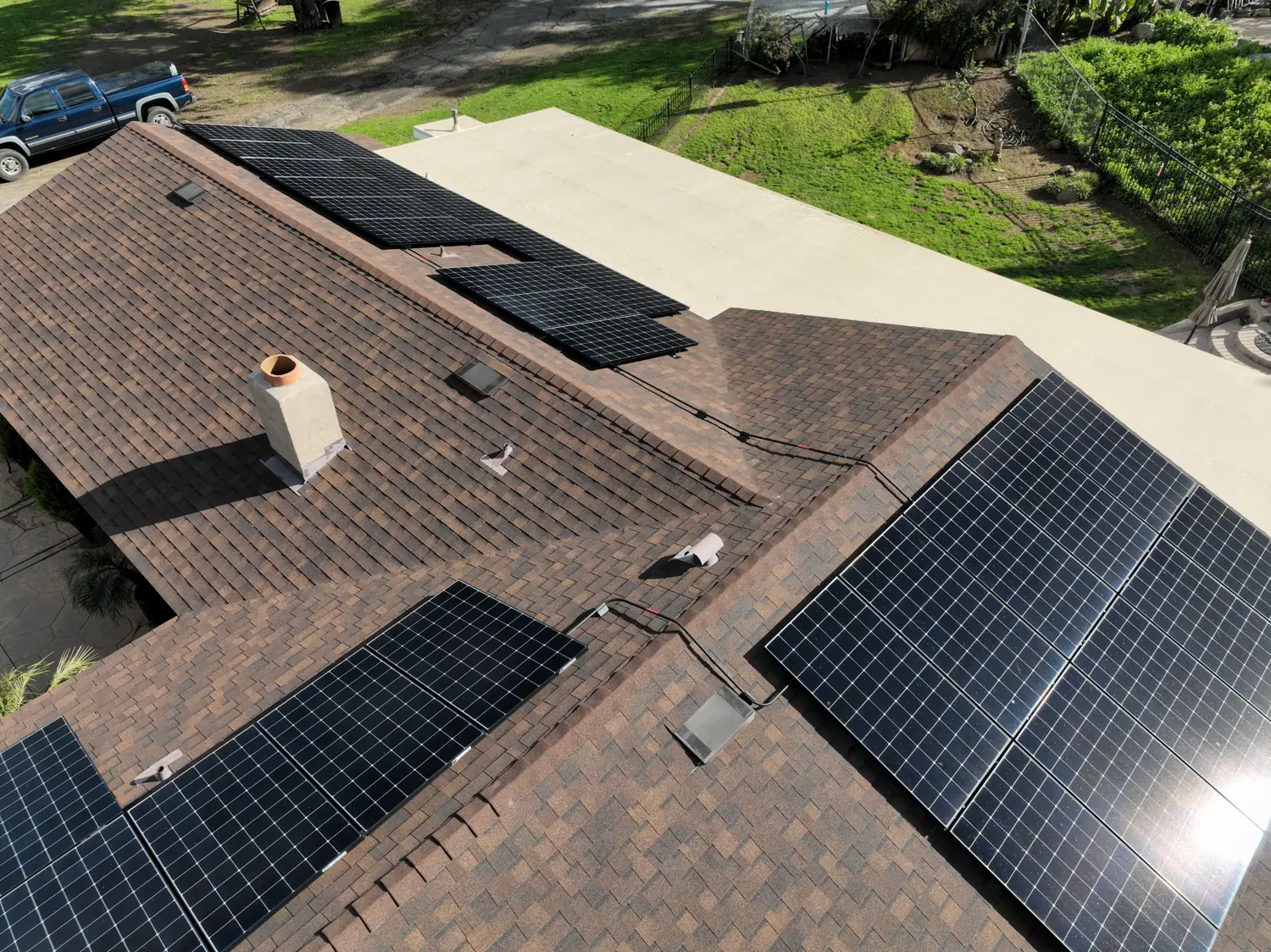
Yes. Solar panels in San Diego keep producing power during May Gray and June Gloom, just less than on a clear day, especially in the morning before the marine layer burns off. A well-designed system is sized on a full year of production, so a softer late spring is already built into the math, and long, bright summer and fall days make up the difference.
What actually happens to solar panels during June Gloom?
May Gray and June Gloom come from the marine layer, a low blanket of cloud that rolls in off the Pacific and sits over coastal San Diego, often through the morning. Solar panels don't need direct sunshine to work. They respond to light, and plenty of diffuse light passes through a thin marine layer. What you'll see in your monitoring app is a slower ramp-up in the morning, a lower peak while the clouds hang around, and then a jump in production once the layer breaks, which on many days happens around late morning or early afternoon.
The size of the dip depends on how thick the cloud is, how long it lingers and where you live. A home right on the coast may stay gray most of the day, while a home a few miles inland often clears earlier. Every day is different, so it helps to judge your system by the month and the year, not by a single overcast morning.
Does location in San Diego County change how much June Gloom affects you?
It does. The marine layer is usually thickest and most persistent close to the ocean and thins out as you move east. In general terms:
- Beach and coastal neighborhoods tend to see the longest gray stretches and the latest burn-off.
- Communities a bit inland often clear by midday and recover a good share of the day's production.
- Inland valleys and foothill areas frequently sit above or beyond the marine layer and see far less impact.
- Roof direction, tilt and shading matter as much as microclimate, and a good design accounts for all of them together.
This is why a generic production estimate isn't enough. A design for your specific address, using local weather history, gives you a realistic picture of what May and June will look like on your roof.
Why is annual production the number that matters?
Your utility bill and your savings play out over twelve months, not one. Solar designers model expected output for every month of the year using historical weather for your location, then size the system to cover the share of your annual usage you want to offset. The lower production in May and June is already in that model, alongside the strong output San Diego typically gets in summer and early fall.
Panel temperature plays a part too. Solar panels lose a little efficiency when they get very hot, so the cooler, milder air that comes with the marine layer helps a bit on the days when light is reduced. It doesn't erase the cloud effect, but it's one reason gray days aren't as bad as people assume.
If you want a rough sense of what a system could produce and save on your home before you talk to anyone, try the Free solar savings calculator. It's a starting point, and a full design will refine it.
How does NEM 3.0 change the June Gloom picture?
Under California's NEM 3.0, the credit you get for sending extra solar power to the grid is worth less than it was under NEM 2.0. That shifts the goal. Instead of exporting as much as possible at midday and drawing it back at night, the smarter approach is to use more of your own solar power directly and store the rest for the evening, when grid power usually costs the most.
June Gloom fits into this in a practical way. On a gray morning your panels produce less, but once the marine layer clears, afternoon production can still fill a battery for the evening peak. Pairing solar with storage means the hours of sunshine you do get are put to their most valuable use, rather than exported for a small credit.
Should you add a battery if you live near the coast?
For most San Diego homeowners under NEM 3.0, we recommend pairing solar with battery storage, and coastal homes that see more gray days are a strong fit. A battery lets you capture afternoon production and use it after sunset, and it can keep essential circuits running during a grid outage. Powersmith Energy works with leading brands including Tesla Powerwall (about 13.5 kWh of usable capacity), Enphase IQ, Generac PWRcell, LG and sonnen. You can compare options on our Battery storage page.
California's Self-Generation Incentive Program (SGIP) offers battery rebates in tiers. As of 2026, the General tier has been around $200 to $250 per kWh, the Equity tier around $850 per kWh and the Equity Resiliency tier around $1,000 per kWh. Funding and rates change, so confirm the current figure before you count on it.
What about federal tax credits in 2026?
Be careful with older articles here. Homeowners who buy a system with cash or a loan no longer get a federal credit; the 30% residential credit under Section 25D ended for systems finished after 31 December 2025, and that includes home batteries bought outright. If a company owns the system through a lease, PPA or prepaid lease or PPA, that company may be able to claim the business ITC under Section 48E, depending on deadlines and equipment rules, and any benefit to you comes through the price. Ask the provider to confirm it in writing. Our page on Federal solar tax credits in 2026 at our Tax Credit page explains what ended and what is left, and Plans at our Financing page covers prepaid, lease and PPA options.
How do you get a design that accounts for June Gloom?
Powersmith Energy is a veteran-owned energy consulting company and authorized dealer based in downtown San Diego. We aren't an installer. We design the right system for your home, match you with vetted top national and local installers, and advocate for you from proposal through permission to operate. Panels come with a 25-year limited manufacturer warranty, backed by the manufacturer rather than by us.
When you request a proposal, ask to see the month-by-month production estimate for your address, not just the annual total. You should be able to see May and June clearly, along with how a battery would shift your evening usage. When you're ready, Get a free quote and we'll walk through the numbers with you.
Frequently asked questions
- Do solar panels work during June Gloom in San Diego?
- Yes. Solar panels still produce power under the marine layer because they use diffuse light, not only direct sun. Output is lower on overcast mornings and usually rises once the clouds burn off.
- Should I size my solar system bigger because of May Gray and June Gloom?
- Not necessarily. A proper design uses local weather history to model every month of the year, so the lower spring output is already included when the system is sized to your annual usage.
- Is a battery worth it for a coastal San Diego home under NEM 3.0?
- For most homes, yes. NEM 3.0 export credits are worth less than under NEM 2.0, so storing afternoon solar for evening use gets more value from the sunshine you do get. SGIP rebates may help; confirm the current figure.
- Do homeowners still get a 30% federal tax credit for solar in 2026?
- No. Homeowners who buy with cash or a loan get no federal credit for systems finished after 31 December 2025. With a lease or PPA, the owning company may claim a business credit, and you should ask the provider to confirm it in writing.
- Does Powersmith Energy install the solar panels?
- No. Powersmith Energy is a veteran-owned energy consulting company and authorized dealer in San Diego. We design your system, partner with vetted installers and advocate for you throughout the project.