


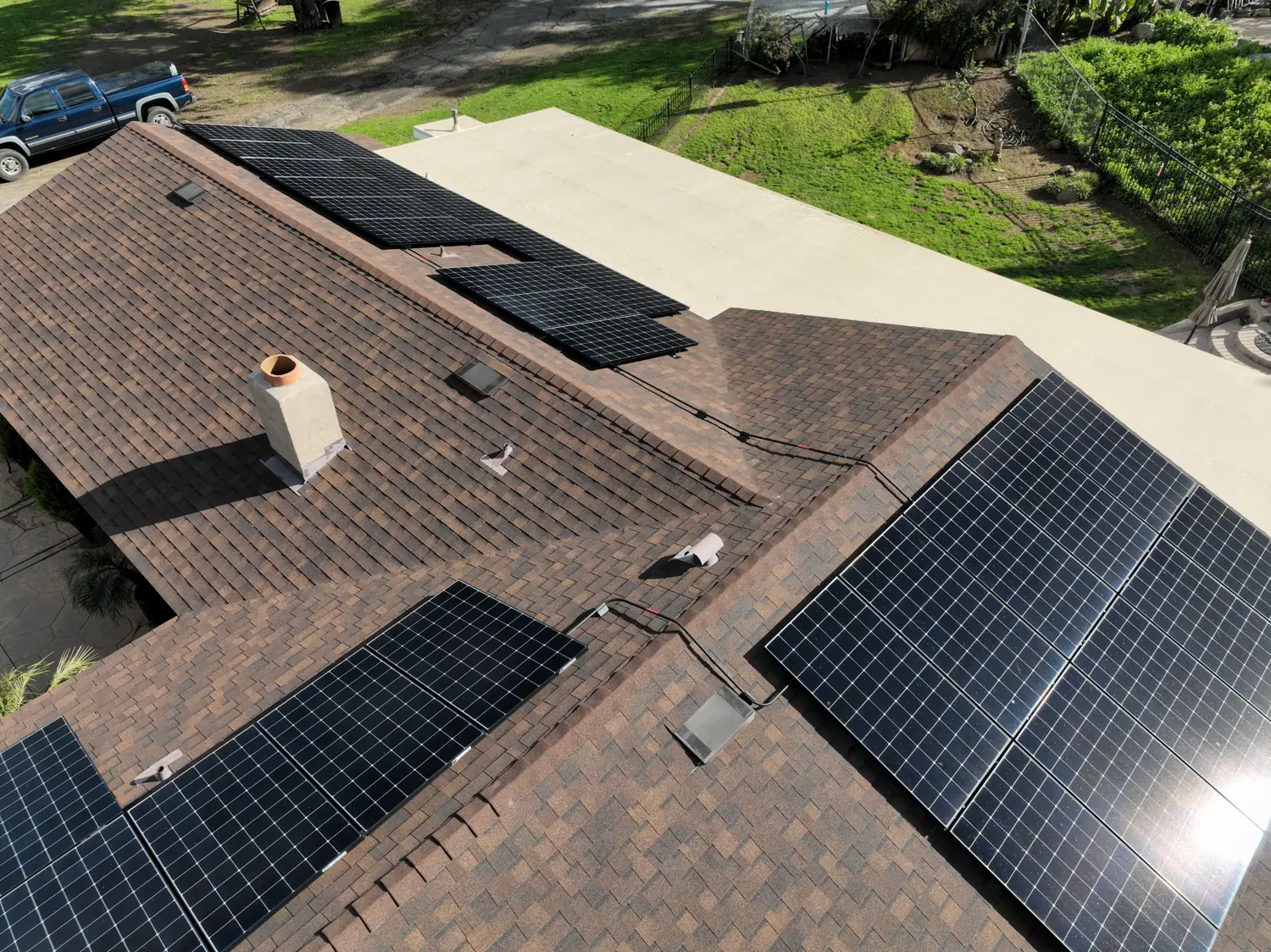
NEM 3.0, California's Net Billing Tariff, pays San Diego homeowners less for the solar power they export to SDG&E than NEM 2.0 did. Solar still saves you money, but your savings now come mostly from using your own solar power instead of selling it. Pairing your panels with battery storage is the most reliable way to protect those savings.
What is NEM 3.0 and who does it apply to in San Diego?
NEM stands for net energy metering, the rules that decide how SDG&E credits you for electricity your solar system sends back to the grid. The California Public Utilities Commission replaced NEM 2.0 with the Net Billing Tariff, which most people still call NEM 3.0. It applies to new SDG&E solar customers who submitted interconnection applications after the transition in spring 2023. As of 2026, confirm the current cutoff and rules with SDG&E or your Powersmith Energy advisor, because tariff details can change.
If you already have solar under NEM 2.0, you generally keep that arrangement for its legacy period. Adding a large amount of new capacity can affect your status, so ask before you expand an existing system.
How is net billing different from NEM 2.0?
Under NEM 2.0, the grid worked like a free battery. You exported extra solar power at midday and earned credits close to the retail rate, then used those credits to cover power you pulled at night. Under NEM 3.0, exports are worth less than they were under NEM 2.0. SDG&E credits exported energy using avoided-cost values that change by hour and season, while you still pay full time-of-use rates for the power you import.
That gap is the whole story. A kilowatt-hour you use yourself saves you the full retail rate. A kilowatt-hour you export earns a smaller credit. The more of your own solar you consume, the better your return.
- NEM 2.0: exports credited near retail value, so the grid effectively stored your surplus.
- NEM 3.0: exports credited at lower, time-varying values, so surplus power earns less.
- Both: you pay SDG&E's time-of-use rates for the electricity you import, with the highest prices in the late afternoon and evening. As of 2026, confirm the current peak window on your rate plan.
Does solar still save money for San Diego homeowners under NEM 3.0?
Yes. San Diego has strong sunshine and some of the highest residential electricity rates in the country, so offsetting what you buy from SDG&E is still valuable. What changed is how you design the system. Under NEM 2.0, many homeowners sized arrays to overproduce and bank credits. Under NEM 3.0, an oversized solar-only system sends a lot of energy to the grid at a discount, which stretches out your payback.
A well-designed NEM 3.0 system is sized around how and when your household actually uses power. Your usage history, your rate plan, any planned EV or heat pump, and your roof all matter. You can get a first look with our free solar savings calculator, then have an advisor refine the numbers using your actual SDG&E bills.
Why do batteries matter so much under NEM 3.0?
A home battery lets you store your midday solar instead of exporting it cheaply, then use that energy during the evening peak when SDG&E power costs the most. That shift turns low-value exports into high-value self-consumption. It also gives you backup power during outages, which matters more as public safety power shutoffs and grid stress events continue in Southern California.
Powersmith Energy works with the leading battery platforms, including Tesla Powerwall (about 13.5 kWh usable), Enphase IQ, Generac PWRcell, LG and sonnen. Each has different strengths in capacity, expandability and backup behavior. You can compare options on our battery storage page.
- Store midday solar instead of exporting it at a lower credit value.
- Power your home through the evening peak when imported electricity costs the most.
- Keep essential circuits running during an outage.
- Some batteries can also be enrolled in programs that export stored energy at higher-value hours. Confirm current program terms before you count on that income.
What incentives help offset the cost of solar and storage?
Several incentives can lower your net cost under NEM 3.0. Treat every figure below as a 2026 planning number, and confirm the current figure before you sign anything.
- The 30% federal Investment Tax Credit (ITC) for qualifying solar and battery systems. As of 2026, confirm the current figure and your eligibility with a tax professional. Our page explains how the credit works.
- California's Self-Generation Incentive Program (SGIP) for battery storage. Planning tiers are roughly $200-250/kWh for the General budget, about $850/kWh for Equity, and about $1,000/kWh for Equity Resiliency. As of 2026, confirm the current figure, since budgets open and close.
- Financing options can also shape your return. You can compare a lease, loan or purchase at our Financing page.
Ownership structure affects which incentives you can claim. If you buy or finance the system, you may be able to claim the ITC yourself. If you lease, the leasing company typically claims it and reflects the value in your payment.
How should you size a solar system for SDG&E's net billing tariff?
Start with your consumption, not your roof. Pull twelve months of SDG&E usage data, ideally hourly interval data, so your design reflects when you use power. Then size the solar array and battery together so most of your production gets used on site, either directly or after a trip through the battery.
- Review your current SDG&E rate plan and your evening usage.
- Plan for future loads like an EV charger, pool pump or electrified heating.
- Match battery capacity to your evening and overnight needs, plus any backup goals.
- Check roof orientation, shading and condition before you commit.
- Get a written estimate that separates solar production, self-consumption and export assumptions.
How does Powersmith Energy help San Diego homeowners navigate NEM 3.0?
Powersmith Energy is a veteran-owned energy consulting company and authorized dealer based in downtown San Diego, serving California and 16 states. We are not an installer. We design your proposal around NEM 3.0, match you with vetted top national and local installers we partner with, and advocate for you from contract through permission to operate. Panels carry a 25-year limited manufacturer warranty, which is provided by the manufacturer, not by Powersmith Energy.
Learn more about residential solar at our Residential Solar page, read about our team at our About page, or request a free quote. We will review your SDG&E bills and show you how solar plus storage performs under net billing for your home.
Frequently asked questions
- What is NEM 3.0 in San Diego?
- NEM 3.0 is California's Net Billing Tariff, which applies to new SDG&E solar customers. It credits the solar power you export to the grid at lower, time-varying values than NEM 2.0, so your savings depend more on using your own solar power.
- Is solar still worth it in San Diego under NEM 3.0?
- Yes, for most homeowners with suitable roofs and meaningful electricity use. San Diego's high SDG&E rates make self-consumed solar valuable. The key is sizing the system to your usage and pairing it with a battery so less energy is exported at a discount.
- Do I need a battery with solar under NEM 3.0?
- A battery is not required, but it is the most effective way to protect savings under NEM 3.0. It stores midday solar for use during the evening peak, when SDG&E electricity costs the most, and it provides backup power during outages.
- Can I combine the federal ITC and SGIP for a home battery?
- In many cases, yes. The 30% federal ITC can apply to qualifying solar and battery systems, and California's SGIP offers per-kWh rebates for storage. Both have eligibility rules and changing budgets, so as of 2026, confirm the current figures before you rely on them.
- Does Powersmith Energy install solar systems?
- No. Powersmith Energy is a veteran-owned energy consulting company and authorized dealer in San Diego. We design your proposal, connect you with vetted national and local installers we partner with, and advocate for you through the entire project.