


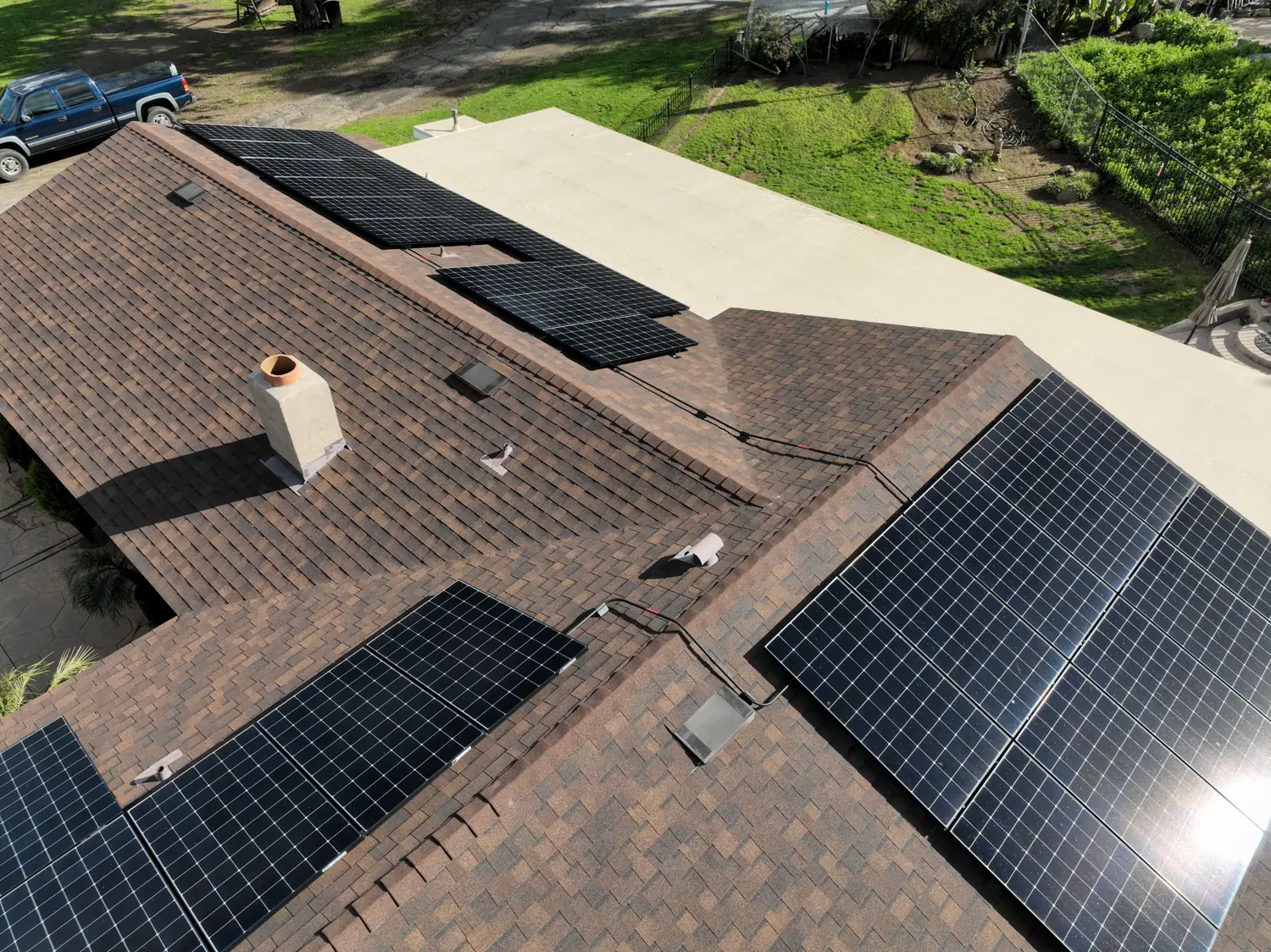
If your roof is near the end of its life or showing damage, you should usually replace it before installing solar panels in San Diego, because removing and reinstalling panels later adds cost and hassle. If your roof is in good shape with plenty of service life left, you can typically go solar without replacing it. The right answer comes down to your roof's age, material, and condition, which a proper inspection will confirm.
Why does roof condition matter so much for solar?
Solar panels are a long-term asset. The panels the installers we partner with use carry a 25-year limited manufacturer warranty, and many systems keep producing well beyond that. Your roof becomes the foundation for that equipment the entire time. If the roof fails partway through, the panels have to come off before the roof can be repaired or replaced, then go back on afterward. That process, often called detach and reset, takes time, involves extra labor, and leaves your system offline while the work is done.
Planning the two projects together avoids paying for that work twice. It also means your roof and your solar array start their service lives at roughly the same time, which keeps future maintenance simpler.
How do you know if your San Diego roof needs replacing first?
San Diego's mild climate is easy on roofs compared to many parts of the country, but strong sun, coastal moisture, and occasional heavy winter rain still take a toll. Look at these signs before you commit to solar:
- Age: if your roof is approaching the expected lifespan for its material, plan for replacement. Lifespans vary by material and installation quality, so confirm with a roofing professional.
- Visible wear: curling, cracked, or missing asphalt shingles, or granules collecting in gutters.
- Cracked or slipped tiles: common on the clay and concrete tile roofs found throughout San Diego County.
- Leaks or water stains: any sign of water inside the attic or on ceilings needs attention before panels go up.
- Sagging or soft spots: these can point to deck or structural problems that must be fixed first.
- Previous patch jobs: a roof with many repairs may be closer to replacement than it looks.
If none of these apply and your roof has substantial life remaining, you are likely a good candidate to go solar now. If several apply, replacing first is usually the smarter move.
Does roof material change the decision?
Yes. Material affects both how long your roof lasts and how solar is mounted to it. Asphalt shingle roofs are the most straightforward surface for mounting panels. Tile roofs, which are common across San Diego neighborhoods, are durable but can be brittle, so installers often take extra care or replace tiles under the mounting points. Some homeowners with older tile roofs choose to replace the underlayment beneath the tile before solar goes on, since the underlayment often wears out before the tiles themselves. Flat roofs and metal roofs each have their own mounting methods as well.
Because every roof is different, a site assessment should cover material, underlayment condition, structure, and orientation before anyone recommends a system design.
Can you finance a new roof and solar together?
In many cases, yes. Some financing options allow you to bundle roof work with your solar project, which can make it easier to handle both at once without paying the full cost up front. Whether that works for you depends on the lender, your credit, and the scope of the roof work. You can review lease, loan, and purchase paths on our financing page to see which structure fits your budget.
On the tax side, the 30% federal ITC applies to qualifying solar equipment and installation. A standard roof replacement generally does not qualify on its own, though some roofing work tied directly to supporting the solar system may be treated differently. Rules change, so as of 2026, confirm the current figure and eligibility with a tax professional. Our Tax Credit page explains how the credit works in more detail.
How does NEM 3.0 affect your solar and roof planning?
Under California's NEM 3.0, the electricity you export to the grid is worth less than it was under NEM 2.0. That shifts the math toward using more of your solar power yourself, which is why pairing panels with battery storage makes sense for many San Diego homes. A battery such as the Tesla Powerwall (about 13.5 kWh usable), Enphase IQ, Generac PWRcell, LG, or sonnen lets you store daytime production for evening use and backup power.
This matters for roof planning because a well-designed NEM 3.0 system is sized around your actual usage, not just maximum roof coverage. Knowing your roof's usable space and condition helps you and your designer balance panel count with storage capacity. You can explore storage options at our Battery Storage page, and California's SGIP program may help offset battery cost. As of 2026, SGIP planning figures are roughly $200-250/kWh for the General tier, about $850/kWh for Equity, and about $1,000/kWh for Equity Resiliency; confirm the current figure before you rely on it.
What happens if you skip the roof replacement?
If your roof is in good condition, skipping replacement is perfectly reasonable, and many homeowners go solar on their existing roof without issues. The risk comes when the roof is already worn. Leaks that develop under panels are harder to spot and harder to reach. When the roof eventually needs replacement, you will pay for panel removal and reinstallation in addition to the roofing itself, and you lose solar production while the system is down.
There is also the question of warranties. The 25-year limited warranty on panels comes from the manufacturer, not from Powersmith Energy, and it covers the panels, not your roof. Roof workmanship is covered separately by whoever installs or repairs the roof. Keeping those responsibilities clear from the start helps you know who to call if something goes wrong.
How does Powersmith Energy help you decide?
Powersmith Energy is a veteran-owned energy consulting company and authorized dealer based in downtown San Diego. We are not an installer, and we do not have a crew. Instead, we partner with vetted top national and local installers and advocate for you throughout the job, from the first assessment through final inspection. That independence lets us give you a straight answer about whether your roof is ready for solar, rather than pushing a project that is not right yet.
When you work with us, we help you understand your roof's condition, coordinate timing if roof work is needed, and compare system designs that fit NEM 3.0. You can learn more about our approach to home systems on our Residential Solar page and about who we are at our About page.
What should you do next?
Start with a clear picture of your roof and your energy use. Gather your recent utility bills, note your roof's approximate age and any repair history, and take a look at the warning signs listed above. Then run your numbers through our free our Solar Savings Calculator page to estimate potential savings. When you are ready for a personalized recommendation, including whether a roof replacement should come first, request a free quote and we will walk you through your options with no pressure.
Frequently asked questions
- Should I replace my roof before going solar in San Diego?
- If your roof is near the end of its service life or has leaks, cracked tiles, or other damage, replacing it first is usually the better choice because removing and reinstalling panels later adds cost. If your roof is in good condition with plenty of life left, you can typically go solar without replacing it.
- Does the 30% federal ITC cover a new roof?
- The 30% federal ITC applies to qualifying solar equipment and installation. A standard roof replacement generally does not qualify on its own, though some roofing work that directly supports the solar system may be treated differently. As of 2026, confirm the current rules with a tax professional.
- Can you put solar panels on a tile roof in San Diego?
- Yes. Tile roofs are common in San Diego and can support solar, but tiles can be brittle and the underlayment beneath them may wear out first. Many homeowners with older tile roofs have the underlayment evaluated or replaced before panels go on.
- Who provides the warranty on my solar panels?
- Panels carry a 25-year limited manufacturer warranty provided by the panel manufacturer. Powersmith Energy is not the warranty provider. Roof workmanship is covered separately by whoever performs the roofing work.
- Does Powersmith Energy install the solar or the roof?
- No. Powersmith Energy is a veteran-owned energy consulting company and authorized dealer in San Diego. We partner with vetted national and local installers and advocate for you throughout the project, including coordinating timing when roof work is needed.