


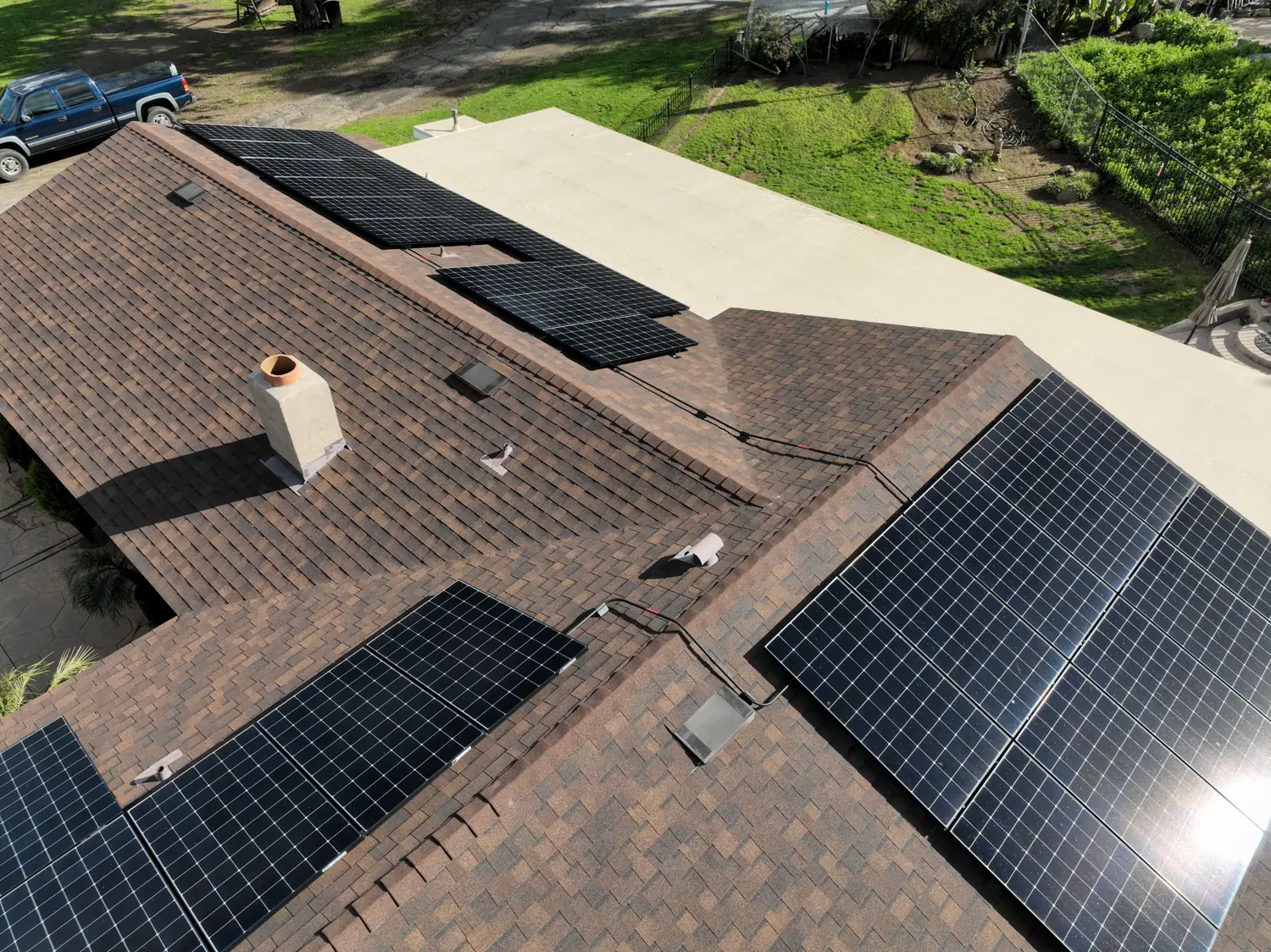
No. Under the California Solar Rights Act, an HOA in California cannot ban solar panels on a roof you own or control, and it cannot impose restrictions that meaningfully raise your cost or cut your system's performance. Your HOA can still require an application and set reasonable rules about placement, appearance, and maintenance, so plan for that review instead of skipping it.
What is the California Solar Rights Act?
The California Solar Rights Act is a set of state laws, found mainly in Civil Code Sections 714 and 714.1 and in the Davis-Stirling Act that governs common interest developments, that protects your right to install solar. The core idea is simple: California treats solar as a public priority, so private agreements like CC&Rs, deed restrictions, and HOA architectural guidelines cannot be used to stop it. Any rule that effectively prohibits solar, or that unreasonably restricts it, is void and unenforceable.
This matters most in San Diego County and across Southern California, where many neighborhoods, townhome communities, and condo complexes are run by associations with detailed design standards. The law does not erase those standards. It limits how far they can reach when the subject is solar energy.
What restrictions can an HOA legally place on solar panels?
Your HOA is allowed to adopt reasonable restrictions. The law defines reasonable by its effect on your system. For photovoltaic solar, a restriction generally cannot increase your system cost by more than $1,000 or decrease its efficiency or specified performance by more than 10 percent. These thresholds come from state law; as of 2026, confirm the current figures with the statute or a qualified attorney, because they have been amended over the years.
In practice, here is what an HOA can commonly ask for:
- A written application before installation, often through an architectural review committee
- Panel placement that minimizes street visibility, as long as it does not push you past the cost or efficiency limits
- Conduit and equipment painted or routed to match the home
- Proof that the installer is licensed and insured
- Compliance with building codes and local permitting
- Agreement that you are responsible for roof damage and maintenance tied to the system
What an HOA generally cannot do is reject solar outright, require placement on a shaded roof plane that guts production, demand an expensive custom mounting system with no real justification, or let your application sit in limbo indefinitely.
How long does an HOA have to approve a solar application?
California law sets a deadline. An HOA must process and approve or deny a complete solar application in writing within a set period, which is 45 days under current law, and an application that is not denied in writing within that window is generally deemed approved. As of 2026, confirm the current figure, since timelines are the kind of detail legislators revisit. A denial also has to explain the reason, and the HOA cannot deny an application on grounds that would violate the cost and efficiency limits.
Keep a dated copy of everything you submit. If you ever need to point to the deadline, a clear paper trail is your best tool.
What about condos and shared roofs?
Condos and townhomes add a wrinkle. If the roof is common area owned by the association rather than you, the rules shift. Civil Code Section 714.1 and the Davis-Stirling Act allow an association to require more from you when solar goes on common area, including that you maintain the system, repair any damage to the roof, carry insurance that names the association, and in some cases remove the system if the roof needs to be replaced. The association can also set a fair process when several owners want limited roof space.
The protection still applies, though. The association cannot use the common area question as a backdoor ban. If your building has shared roof space, read your CC&Rs closely and ask the board early what its common area solar policy is.
What can you do if your HOA denies solar anyway?
Most HOA disputes end with a revised application, not a lawsuit. Start by asking the board exactly which rule the design violates and what change would satisfy it. Often the fix is moving an array, adding a skirt, or painting conduit. If the HOA insists on something that crosses the cost or efficiency line, put your objection in writing and cite the Solar Rights Act.
If the HOA still refuses, California law allows a court to award attorney's fees to the prevailing party in a solar rights dispute, and it provides for a civil penalty against an association that willfully violates the law. As of 2026, confirm the current penalty figure with an attorney. This article is general information, not legal advice, and a real-estate attorney is the right call before escalating.
How do you get your HOA application approved the first time?
A well-prepared application is the fastest path. Here is what tends to work:
- Request the current architectural guidelines and the solar application form before you finalize a design
- Submit a full package: site plan, roof layout, panel and inverter spec sheets, and photos or renderings
- Show placement on the roof planes that produce best, and explain if alternatives would cut performance
- Note any battery or electrical equipment location, including wall-mounted storage
- Include the installer's license and insurance information
- Send it by a trackable method and record the date received
At Powersmith Energy, we are an energy consulting company, not an installer. We help you plan the system, match you with vetted top national and local installers we partner with, and advocate for you through the job, including getting the paperwork your HOA asks for organized up front. You can see how that works on our Residential solar page, or learn more about our veteran-owned San Diego team.
Does the Solar Rights Act affect incentives like the ITC and SGIP?
The Solar Rights Act protects your ability to install. Incentives determine what the system costs you. The 30% federal ITC (Investment Tax Credit) applies to qualifying residential solar and battery storage; as of 2026, confirm the current figure and your eligibility with a tax professional. Our 30% federal ITC page walks through the basics. California's SGIP program also offers battery rebates, with 2026 planning tiers around $200-250/kWh for General, about $850/kWh for Equity, and about $1,000/kWh for Equity Resiliency; confirm current figures before you budget.
Storage matters more than ever under California NEM 3.0, because exported solar is worth less than it was under NEM 2.0. Pairing panels with a battery such as a Tesla Powerwall (about 13.5 kWh usable), Enphase IQ, Generac PWRcell, LG, or sonnen lets you use more of your own power. Include the battery in your HOA application so it is approved alongside the panels. Compare options on our Battery storage page, and when you are ready, request a free quote.
Frequently asked questions
- Can an HOA in California completely ban solar panels?
- No. The California Solar Rights Act makes any CC&R or HOA rule that prohibits solar, or unreasonably restricts it, void and unenforceable. An HOA can require an application and set reasonable rules, but it cannot ban solar on a roof you own or control.
- What counts as a reasonable HOA solar restriction in California?
- For photovoltaic systems, a restriction is generally reasonable only if it does not raise your system cost by more than $1,000 or reduce efficiency by more than 10 percent. As of 2026, confirm the current figures with the statute or an attorney.
- How long does my HOA have to respond to a solar application?
- Under current California law, an HOA must approve or deny a complete solar application in writing within 45 days, or the application is generally deemed approved. As of 2026, confirm the current figure.
- Can a condo association stop me from putting solar on a shared roof?
- A condo association can set extra conditions for solar on common area, such as maintenance, roof repair responsibility, and insurance naming the association. It cannot use those conditions as a disguised ban on solar.
- Does Powersmith Energy install the solar system?
- No. Powersmith Energy is a veteran-owned energy consulting company and authorized dealer in San Diego. We partner with vetted top national and local installers and advocate for you through the project, including helping organize what your HOA requires.