


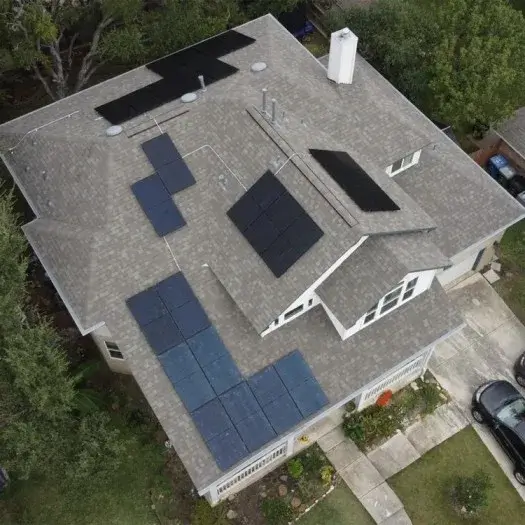
In most cases, yes. A newly constructed detached ADU in San Diego generally must include solar panels under the California Energy Code (Title 24, Part 6), while attached ADUs and ADUs carved out of existing space, such as garage conversions, are usually exempt. The required size comes from a Title 24 formula based on the ADU's conditioned floor area and climate zone, but the right size for your bills may be larger, so check the current code version with the City or County of San Diego before you finalize plans.
Which San Diego ADUs need solar under Title 24?
California's solar mandate applies to newly constructed low-rise residential buildings, and the California Energy Commission has treated a new detached ADU as a new building. That is the trigger. If you are pouring a new foundation and framing a standalone backyard unit, plan on solar being part of the permit set.
The rules usually look like this, though Title 24 is updated on a three-year cycle and local plan checkers interpret edge cases. As of 2026, confirm the current requirements with your building department or plan reviewer:
- New detached ADU: solar generally required.
- Attached ADU added to the main house: generally treated as an addition, so the solar mandate typically does not apply.
- Conversion of a garage, basement or other existing space: generally exempt because no new building is created.
- Junior ADU (JADU) inside the existing home: generally exempt.
- Manufactured or factory-built ADUs: rules can differ, so ask the manufacturer and your plan checker.
Are there exceptions that let you skip or reduce the solar?
Title 24 includes exceptions for sites where solar is impractical. Common ones involve heavy shading from trees, neighboring buildings or terrain, and roofs too small to hold a meaningful array once fire setbacks and vents are accounted for. Your designer documents these on compliance forms; you do not simply opt out.
Another practical route: the ADU requirement can often be met by a solar system on the main house, as long as that system is sized to cover the ADU's required share in addition to the house. If you already have solar, or you plan to add it to the main roof, ask your plan checker whether expanding that system satisfies the ADU requirement. This can be simpler than putting a small array on a small ADU roof, but confirm it in writing during plan check.
How is the required solar size calculated?
Title 24 sets the minimum system size with a formula that uses the ADU's conditioned floor area, the number of dwelling units and factors tied to your California climate zone. San Diego County spans several climate zones, from the coast to the inland valleys, so the same size ADU can carry a different minimum depending on where it sits. Your energy consultant or Title 24 compliance preparer runs the official number.
Treat that number as a floor, not a target. The code minimum is designed for compliance, not to zero out your bill. A small ADU with a mini-split, an induction range, a heat pump water heater and maybe an EV charger can use far more electricity than the minimum array produces.
How should you size ADU solar for real savings?
Size from actual or expected use rather than from the code sheet. A good process looks like this:
- Estimate the ADU's load: occupants, appliances, all-electric heating and cooling, water heating and any EV charging.
- Decide how the ADU is metered: a shared meter with the main house or a separate meter changes how you size and who benefits.
- Check roof space and orientation on both the ADU and the main house.
- Compare the Title 24 minimum against your estimated load, and build to whichever is higher if the budget allows.
- Plan for battery storage, because under NEM 3.0 what you store often matters as much as what you produce.
You can get a rough starting point with our free solar savings calculator, then refine it with a consultant once you have plans and a load estimate.
Why does NEM 3.0 change ADU solar planning?
Under California's NEM 3.0 billing, excess solar you export to the grid earns much less than it did under NEM 2.0. That means an ADU array that pushes most of its midday power back to SDG&E delivers less value than you might expect. Pairing solar with a battery lets you store daytime production and use it in the evening, when rates are highest and the ADU's occupants are actually home.
Battery options the installers we partner with work with include Tesla Powerwall (about 13.5 kWh usable), Enphase IQ, Generac PWRcell, LG and sonnen. California's Self-Generation Incentive Program (SGIP) offers battery rebates in tiers, roughly $200 to $250 per kWh for the general budget, around $850 per kWh for the equity tier and around $1,000 per kWh for equity resiliency. As of 2026, confirm the current figure and availability, since SGIP budgets open and close. Learn more on our battery storage page.
Is there still a federal tax credit for ADU solar?
Not if you buy it. The 30% federal homeowner credit (Section 25D) ended for any system finished after December 31, 2025, even if you paid earlier, and that includes home batteries bought outright. If you pay cash or finance an ADU system in 2026, plan your budget with no federal credit.
If a company owns the system through a lease, PPA or prepaid lease or PPA, that company may be able to claim the business investment tax credit (Section 48E). You claim nothing yourself, and any benefit shows up in the price you pay. That credit depends on construction starting by July 4, 2026 or the system being in service by December 31, 2027, plus new foreign-entity (FEOC) equipment rules, so ask the provider to confirm eligibility in writing. Our page explains what ended and what is left.
How does Powersmith Energy help with an ADU project?
Powersmith Energy is a veteran-owned energy consulting company and authorized dealer based in downtown San Diego. We are not an installer. We help you size the system, compare equipment and financing, and match you with vetted national and local installers, then we advocate for you through permitting, plan check and interconnection. Panels carry a 25-year limited manufacturer warranty, provided by the manufacturer rather than by us. To start, visit our residential solar page or request a free quote with your ADU plans in hand.
Frequently asked questions
- Does a garage conversion ADU in San Diego need solar panels?
- Generally no. Converting a garage or other existing space into an ADU does not create a new building, so the Title 24 solar mandate usually does not apply. Confirm with the City or County of San Diego plan checker, since interpretations and code versions change.
- Can my main house solar system cover the ADU requirement?
- Often, yes. Title 24 compliance can typically be met by a main house system that is sized to cover the ADU's required share in addition to the house. Ask your plan checker to confirm and document it during plan review.
- Who calculates the required solar size for an ADU?
- A Title 24 compliance preparer or energy consultant runs the official calculation, which uses the ADU's conditioned floor area and its California climate zone. That figure is a minimum; size to your expected usage if you want meaningful bill savings.
- Can I get the 30% federal tax credit on ADU solar in 2026?
- Not if you buy the system. The homeowner credit under Section 25D ended for systems finished after December 31, 2025. With a lease or PPA, the company that owns the system may claim the Section 48E business credit and pass value through the price; get that confirmed in writing.
- Should I add a battery to my ADU solar system?
- Under NEM 3.0, exported solar earns less than it did under NEM 2.0, so a battery helps you use your own power in the evening. California's SGIP may offer a rebate; as of 2026, confirm the current figure and availability.