


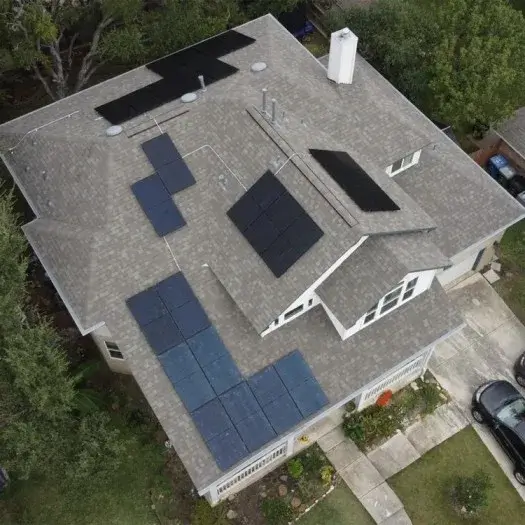
For most San Diego solar owners with a battery and no EV, TOU-DR1 is a sensible default. It keeps a simple daily 4-9 p.m. peak that your battery can cover. If you charge an EV at home overnight, EV-TOU-5 or TOU-ELEC usually comes out ahead because of their low overnight and per-kWh rates, but only if your usage justifies their monthly fees. The right answer comes from your actual SDG&E interval data, not a rule of thumb.
Why does your SDG&E rate plan matter so much with solar?
Under California's NEM 3.0, officially the Net Billing Tariff, the power you export to SDG&E is credited at hourly values that are usually far below what you pay to import. That changes the game. Your savings now depend less on how much your panels produce and more on when you use electricity, when you export it, and what each hour costs on your rate plan. Two neighbors with identical systems can see very different bills simply because they picked different SDG&E time-of-use plans.
New solar customers under NEM 3.0 must take service on an eligible time-of-use rate. As of 2026, the common options are TOU-DR1, EV-TOU-5 and TOU-ELEC. Confirm current eligibility and pricing with SDG&E, because rate names, windows and charges change through CPUC proceedings.
How does TOU-DR1 work for solar owners?
TOU-DR1 is SDG&E's standard residential time-of-use plan. It has three periods: on-peak from 4 to 9 p.m. every day, off-peak, and super off-peak (overnight hours, plus extended midday hours on weekends and in the spring months). As of 2026 it carries no extra monthly service fee beyond the standard charges that apply to all residential customers; confirm the current figure on your bill.
- Best fit: homes with solar and a battery, no EV or light EV charging
- Strength: simple structure, no special plan fee
- Weakness: overnight rates are higher than on EV-focused plans, so heavy overnight charging costs more
- Watch for: the 4-9 p.m. window applies seven days a week, so evening cooking, laundry and air conditioning all land at peak prices
When is EV-TOU-5 the better choice?
EV-TOU-5 is built for households that charge an electric vehicle at home. Its super off-peak period runs from midnight to 6 a.m., with additional midday super off-peak hours on weekdays in March and April. Those overnight rates are among the lowest SDG&E offers. The tradeoff is a fixed monthly service fee, so the plan only pays off if you shift enough usage into the cheap hours. As of 2026, confirm the current fee and rates with SDG&E.
- Best fit: one or more EVs charged at home on a timer after midnight
- Strength: very low super off-peak rate for the whole house, not just the car
- Weakness: the monthly fee eats into savings if your EV mileage is low
- Requirement: you must have an EV registered at the address
If you also have a battery, EV-TOU-5 can work well. Solar recharges the battery during the day, the battery covers 4-9 p.m., and the car charges overnight at super off-peak prices.
What about TOU-ELEC and other electrification rates?
TOU-ELEC is SDG&E's electrification rate for homes with an EV, a battery or an electric heat pump for space or water heating. It pairs a monthly fixed charge with lower per-kWh rates across all periods. That structure rewards households that use a lot of electricity, such as an all-electric home with two EVs. For a small, efficient home, the fixed charge may outweigh the lower energy prices.
You may also see references to DR-SES, an older solar-specific rate. It is generally tied to legacy NEM arrangements. If you have it today, have someone run the numbers before you switch, because you may not be able to switch back. California's income-graduated fixed charge is also being phased into residential bills, which shifts some costs out of per-kWh rates. As of 2026, confirm the current figure and how it applies to your plan.
How does a battery change which plan you should pick?
Under NEM 3.0, a battery is what makes most solar systems pencil out. Instead of exporting midday surplus at a low credit, you store it and use it during the 4-9 p.m. peak, when imported power costs the most. A Tesla Powerwall stores about 13.5 kWh of usable energy, which covers the evening peak for many San Diego homes. Enphase IQ, Generac PWRcell, LG and sonnen offer other sizes and features. You can compare them on our battery storage page.
With a well-sized battery, the gap between plans narrows, because you avoid most peak-period imports on any plan. At that point the decision comes down to two questions. How much do you import overnight? And is a lower overnight rate worth a monthly fee? Batteries may also qualify for California's SGIP rebate. As of 2026, planning tiers are roughly $200-250/kWh for General, about $850/kWh for Equity and about $1,000/kWh for Equity Resiliency; confirm the current figure before you count on it. The 30% federal ITC can also apply to qualifying solar and storage. See our Tax Credit page for details.
How do you actually compare plans for your home?
Skip the guessing. SDG&E's online account lets you download hourly or 15-minute usage data, and that file tells you which plan wins. Here is the process we walk customers through:
- Download at least 12 months of interval data so summer and winter are both included
- Note your EV charging habits, pool pumps, air conditioning and any planned electrification
- Model your solar production and battery dispatch against each eligible rate
- Include all fixed charges, not just per-kWh prices
- Re-check annually, since SDG&E rates and your household both change
Our free solar savings calculator gives you a quick first estimate. For a plan-by-plan comparison built on your real usage, request a free quote and a Powersmith Energy consultant will run the numbers with you.
Where does Powersmith Energy fit in?
Powersmith Energy is a veteran-owned energy consulting company and authorized dealer based in downtown San Diego. We are not an installer. We design the right mix of solar, battery storage and rate plan around your bill. Then we match you with vetted national and local installers and advocate for you through the job, from permitting to SDG&E interconnection. Panels carry a 25-year limited manufacturer warranty, which the manufacturer provides, not Powersmith. If you are weighing lease, loan or purchase, our financing options show how each affects your savings.
Frequently asked questions
- What is the best SDG&E rate plan for solar without an EV?
- For most San Diego homes with solar and a battery but no EV, TOU-DR1 is a solid default because it has a simple 4-9 p.m. peak and no extra plan fee. Confirm with your own SDG&E interval data, since high-usage homes may do better on TOU-ELEC.
- Is EV-TOU-5 worth it with solar panels?
- EV-TOU-5 is usually worth it if you charge an EV at home after midnight, because its super off-peak rate applies to the whole house. Its monthly service fee means low-mileage drivers may save more on TOU-DR1. As of 2026, confirm current rates with SDG&E.
- Do I have to be on a time-of-use plan with solar under NEM 3.0?
- Yes. New solar customers under California's NEM 3.0 Net Billing Tariff must take service on an eligible SDG&E time-of-use rate, such as TOU-DR1, EV-TOU-5 or TOU-ELEC. Confirm current eligibility with SDG&E.
- Does a battery change which SDG&E plan I should choose?
- A battery narrows the difference between plans because it covers most of the 4-9 p.m. peak on any rate. The choice then depends mainly on your overnight usage and whether a lower overnight rate justifies a monthly fee.
- Can Powersmith Energy help me pick an SDG&E rate plan?
- Yes. Powersmith Energy, a veteran-owned energy consulting company in San Diego, models your usage against each eligible SDG&E rate when designing your solar and battery system, then connects you with vetted installers.