


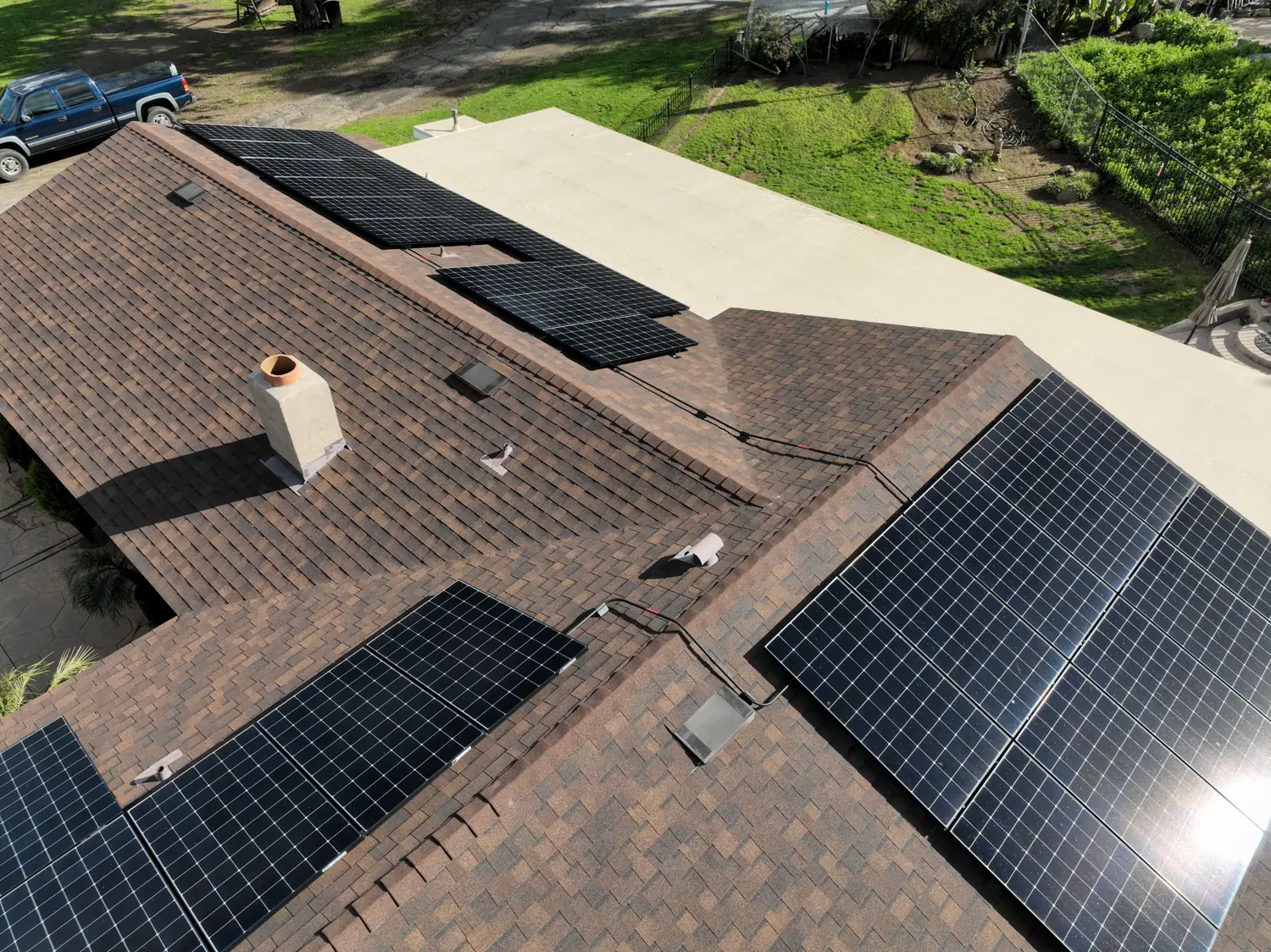
If you have a grid-tied solar system without a battery, your panels automatically shut off during a San Diego power outage, even in full sun. This is a required safety feature called anti-islanding, and it means your home has no power from solar until the grid comes back on. Adding a battery like a Tesla Powerwall is the only way to keep power flowing when SDG&E's lines go down.
Why does solar shut off when the grid goes down?
Most residential solar systems in California are grid-tied, meaning they're wired directly into the same lines SDG&E uses to serve your neighborhood. When utility crews work on those lines during an outage, they need to know the lines are dead. If your panels kept sending power backward into the grid, that would create a serious electrocution risk for anyone working on repairs.
To prevent that, every grid-tied inverter sold in the U.S. includes anti-islanding protection. The inverter detects when grid voltage drops and automatically disconnects your system within a few cycles. Your panels keep making electricity, but the inverter won't send it anywhere, so your home goes dark along with everyone else's.
So a $0 electric bill still means no power in a blackout?
Yes. This surprises a lot of homeowners who assume solar means independence from SDG&E. It doesn't, not without storage. Net energy metering lets you bank credits for electricity you send to the grid during the day, but it doesn't store any physical electricity on your property. When the grid is down, there's nothing local to draw from, so the house has no power regardless of how large your solar array is or how sunny it is outside.
What actually keeps the lights on in an outage?
A battery is what changes the equation. Systems like Tesla Powerwall, Enphase IQ, Generac PWRcell, LG, and sonnen store the solar energy your panels produce during the day so it's available after sunset or during a grid outage. When paired with the right equipment, a battery setup can detect an outage and switch your home to backup power in a fraction of a second, often before you'd even notice the lights flicker.
This is a meaningful shift under NEM 3.0, California's current net metering structure. Exported solar is worth less than it was under the old NEM 2.0 rules, so a lot of homeowners are pairing new systems with storage anyway to use more of their own power on-site, rather than exporting it for a smaller credit. Backup protection ends up being a side benefit of a decision that already made financial sense.
What can a home battery actually run during an outage?
This depends on battery capacity and how your system is configured. A single unit like a Tesla Powerwall offers roughly 13.5 kWh of usable storage, which is typically enough to cover essential circuits such as refrigeration, Wi-Fi, lighting, and some outlets for an extended stretch, with some homeowners wiring in HVAC or well pumps depending on load and how many batteries they install. The installers Powersmith Energy partners with size this out based on your actual home, not a generic estimate, since every household's critical loads look different.
- Refrigerators and freezers
- Lighting circuits
- Wi-Fi routers and modems
- Phone and laptop charging
- Well pumps or medical equipment (if specifically wired in)
Is there an incentive to add a battery in California?
Yes. Battery storage can qualify for the 30% federal ITC, and California's Self-Generation Incentive Program (SGIP) offers additional rebates on top of that. As of 2026, SGIP's General Market tier runs roughly $200-250 per kWh, while the Equity and Equity Resiliency tiers run considerably higher, around $850 and $1,000 per kWh respectively, for households that qualify based on location or medical need. Confirm the current figures before you budget, since SGIP tiers and funding levels shift as the program gets reauthorized. You can see how the ITC applies to your project on the Tax Credit page.
What should San Diego homeowners without a battery do now?
If you already have solar without storage, you're not stuck. Most systems can be retrofitted with a battery, though the options and cost depend on your existing inverter and panel setup. If you're still planning a system, it's worth running the numbers on storage from the start rather than adding it later. The Solar Savings Calculator page tool on our site gives you a quick read on how solar plus storage pencils out for your home, and the Battery Storage page breaks down the brands we work with in more detail.
Powersmith Energy is a veteran-owned energy consulting company based in downtown San Diego, and we work as an authorized dealer across California and 16 states. We're not an installation company ourselves; we partner with vetted national and local installers and advocate for you through the entire project, from design through financing. Whether you're looking at our Residential Solar page or our Commercial Solar page solar, our job is to make sure the system you end up with actually matches how you live or operate, not just what's cheapest to quote.
How do you pay for a battery addition?
Financing options vary by household and by whether you're adding storage to an existing system or building new. The Financing page walks through lease, loan, and cash purchase paths, and the installers we partner with can lay out how incentives like the ITC and SGIP affect each option. If you want a straight answer on what backup power would cost for your specific home, our Free Quote page is the fastest way to get a real quote instead of a ballpark guess.
Frequently asked questions
- Does solar work at all during a power outage without a battery?
- No. Grid-tied solar panels without a battery automatically shut off during an outage due to anti-islanding safety requirements, even if the sun is out. Your home gets zero power from the system until SDG&E restores grid power.
- Why can't my inverter just keep powering my house directly?
- Standard grid-tied inverters are designed to shut down when they detect the grid is down, to protect utility workers repairing lines from backfed electricity. Without a battery and the right transfer equipment, there's no safe way for the system to isolate your home and keep running.
- Can I add a battery to solar I already have installed?
- In many cases, yes. Retrofitting a battery like a Tesla Powerwall, Enphase IQ, or Generac PWRcell onto an existing system is common, though compatibility depends on your current inverter. An installer can evaluate your setup and tell you what's possible.
- How much of my home will a battery actually back up?
- It depends on battery size and how the system is wired. A single unit with roughly 13.5 kWh of usable storage, like a Tesla Powerwall, typically covers essential circuits such as refrigeration, lighting, and Wi-Fi; larger loads like HVAC may require multiple batteries.
- Does California still offer incentives for adding battery storage?
- Yes. Battery storage can qualify for the 30% federal ITC, and California's SGIP program offers additional rebates that vary by tier. Confirm current SGIP figures for 2026, since funding and rebate levels are updated periodically.